History of the Sabbath
and First Day of the Week
Who changed the Sabbath? This is the question that every serious Bible student eventually confronts — and J. N. Andrews answers it with devastating historical precision. In this landmark 1862 work, Andrews traces the seventh-day Sabbath through every century from Creation to his own day, drawing on primary sources in Latin, Greek, Hebrew, and English to prove beyond reasonable doubt that no divine authority ever changed the Sabbath from the seventh day to the first. The change was made by human ecclesiastical and civil power — by the Roman Emperor Constantine (321 AD), by the Council of Laodicea (~363 AD), and by the papacy that openly claims credit for the alteration to this day. This is the single most comprehensive historical document the Sabbath question has ever produced, and it is here in full.
“Remember the Sabbath day, to keep it holy. Six days shalt thou labour, and do all thy work: but the seventh day is the Sabbath of the LORD thy God… For in six days the LORD made heaven and earth… and rested the seventh day: wherefore the LORD blessed the Sabbath day, and hallowed it.”— Exodus 20:8–11 (KJV) — The commandment J.N. Andrews spent his life defending
History of the Sabbath and First Day of the Week (1862)
Read the complete work below. Download the PDF for sharing, printing, or offline study. This is the definitive historical answer to the question “who changed the Sabbath?”
Who Changed the Sabbath from Saturday to Sunday?
The answer is not in the Bible. It is in the historical record that J.N. Andrews spent his life documenting. Here is that record in concentrated form — with the primary sources Andrews himself used.
The Historical Indictment
“Remember the Sabbath day, to keep it holy… the seventh day is the Sabbath of the LORD thy God… For in six days the LORD made heaven and earth, the sea, and all that in them is, and rested the seventh day: wherefore the LORD blessed the Sabbath day, and hallowed it.”— This is the baseline. The Sabbath is the seventh day — Saturday. No New Testament passage ever alters it.
Luke 4:16 — Jesus “went into the synagogue on the Sabbath day.” • Luke 23:56 — The women “rested the Sabbath day according to the commandment” — after the crucifixion. • Acts 13:14, 16:13, 17:2, 18:4 — Paul preached on the Sabbath, to both Jews and Gentiles, throughout his missionary journeys.— Not one New Testament text commands Christians to worship on Sunday or repeals the seventh-day Sabbath.
“On the venerable Day of the Sun let the magistrates and people residing in cities rest, and let all workshops be closed.”— Emperor Constantine I — Codex Justinianus, Lib. 3, Tit. 12, 3 — The first civil Sunday law in history — March 7, 321 AD — documented and cited in full by J.N. Andrews
“Christians shall not Judaize and be idle on Saturday [Sabbato], but shall work on that day; but the Lord’s Day they shall especially honor, and as being Christians, shall, if possible, do no work on that day. If, however, they are found Judaizing, they shall be shut out from Christ.”— Council of Laodicea, Canon 29, c. 363 AD — The first church council to formally condemn Sabbath observance — primary source cited in Andrews’ History of the Sabbath, ch. 27
“Sunday is our mark of authority… the church is above the Bible, and this transference of Sabbath observance is proof of that fact.”— Catholic Record of London, Ontario — September 1, 1923 — One of many Catholic publications and catechisms that openly claim authority for the Sabbath-to-Sunday change
“Of course the change [of the Sabbath to Sunday] was her act… and the act is a mark of her ecclesiastical power and authority in religious matters.”— C.F. Thomas, Chancellor of Cardinal Gibbons — Letter dated November 11, 1895 — Cited in Adventist research archives — The papacy itself identifies Sunday as the mark of its authority
This is what J.N. Andrews proved in 1862 with 400+ pages of original-language primary source documentation: the Sabbath was never changed by divine authority. It was changed by human ecclesiastical power — by Rome, by Constantine, by church councils that the Reformers themselves identified as the Antichrist system described in Daniel 7:25: “he shall think to change times and laws.”
The Third Angel’s Message of Revelation 14:9–12 is the warning against worshipping the beast and his image — and the seal of God is the seventh-day Sabbath, the sign of the Creator’s authority (Exodus 31:13, Ezekiel 20:12). The mark of the beast is Sunday sacredness enforced by civil law — precisely what Constantine and Rome established. Every century of this history is documented in the book below.
All J. N. Andrews Writings
John Nevins Andrews was the most linguistically gifted scholar in early Adventism — reading Latin, Greek, Hebrew, French, and German — and he put every skill in service of the Sabbath truth.
History of the Sabbath and First Day of the Week
The defining historical work on the Sabbath question — 400+ pages tracing the seventh-day Sabbath from Creation through every century, proving the change was made by human authority, not God.
Read PDFThree Messages of Revelation 14:6–12
Andrews’ definitive study of the Three Angels’ Messages — the judgment hour, the fall of Babylon, and the warning against the beast and his image. The Sabbath as the seal of God in the final crisis.
Read PDFThe Sanctuary and the 2300 Days
Andrews’ systematic study of Daniel 8:14 and the heavenly sanctuary — the prophetic key that unlocked the meaning of October 22, 1844, showing the judgment hour had begun.
Read PDFSermon on the Two Covenants
Andrews addresses the two-covenant theology that was used to dismiss the law of God — presenting the biblical case for the perpetuity of the moral law including the seventh-day Sabbath.
Read PDFHistory of the Sabbath and First Day of the Week
The expanded and revised second edition of the foundational 1862 work — updated with additional historical sources and stronger documentation of the century-by-century Sabbath record.
Archive.orgHebrews — The Epistle
Andrews’ scholarly commentary on the Epistle to the Hebrews — the book most often used to argue for the abolition of the Sabbath — systematically answered from the original Greek text.
Read in LibraryWho Was J. N. Andrews?
From Maine farm boy to the most linguistically gifted scholar in early Adventism — the man who documented, with irrefutable historical precision, that the Sabbath was changed by Rome, not by God.
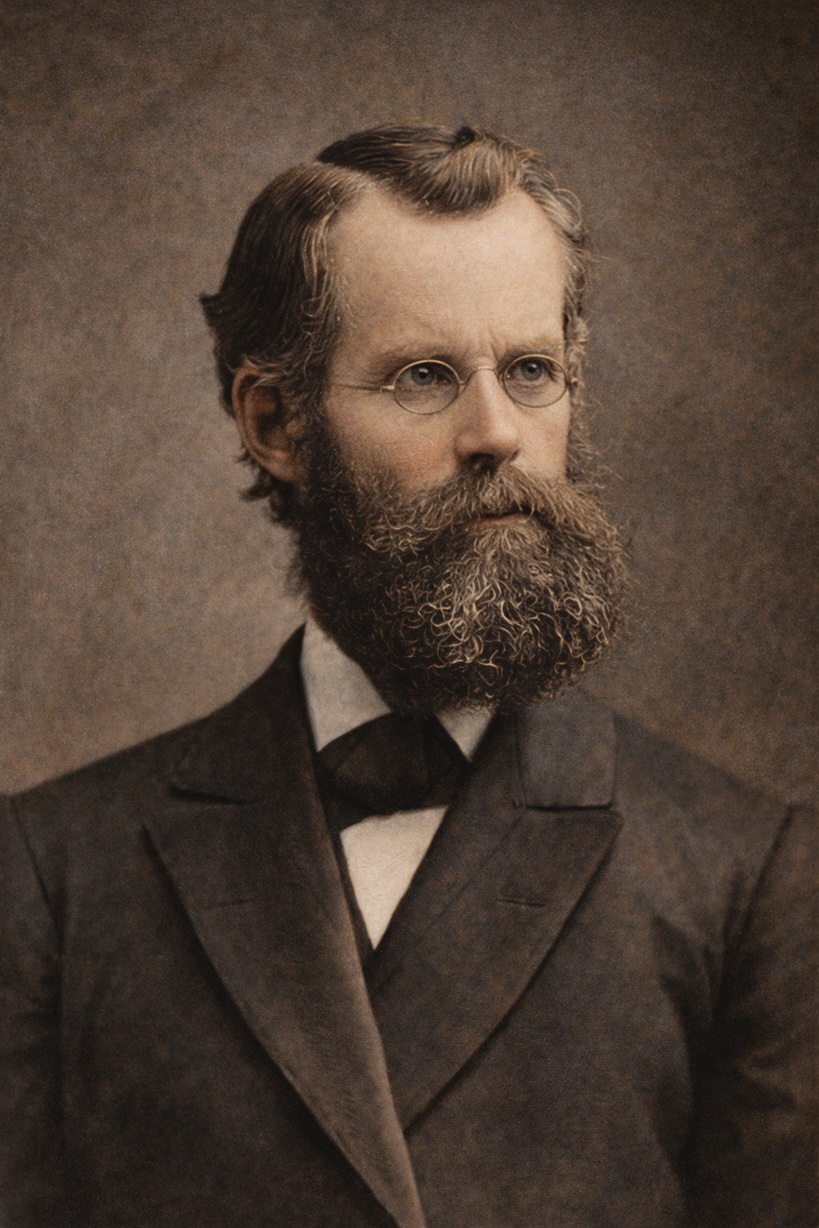
J. N. Andrews (1829–1883) — Scholar, Editor, First Overseas Adventist Missionary — Sent to Switzerland 1874
The Scholar Who Answered “Who Changed the Sabbath?”
John Nevins Andrews was born in Poland, Maine, on July 22, 1829, and joined the Millerite revival at age fourteen. After the Great Disappointment of October 22, 1844, he found the Sabbath truth through the ministry of Captain Joseph Bates, and in 1849 he began his lifelong work of documenting, defending, and proclaiming the seventh-day Sabbath as the commandment of God and the seal of the living God.
Unlike many of his contemporaries, Andrews was not merely a preacher — he was a primary source scholar. He taught himself Latin, Greek, Hebrew, French, and German specifically to access the ecclesiastical records, council proceedings, and historical documents that chronicled the Sabbath’s fate in the early church. The result was the 1862 History of the Sabbath and First Day of the Week — a work that has never been superseded and never, to this day, been historically refuted.
In 1867 he was elected General Conference president. In 1874, after the death of his wife Angeline, he accepted the call to become the first official Adventist missionary sent overseas, traveling with his two children to Switzerland. There he established French-language publishing, launched Les Signes des Temps, and built the foundation of European Adventism. He died at Basel on October 21, 1883, having given everything he had to the Sabbath message.
Ellen White said of him: “You are the ablest man in our ranks.” His answer to Rome’s claim over the Sabbath was not rhetoric — it was the historical record itself, in Rome’s own words, in council documents, in catechisms that the Catholic Church has never retracted.
Related Pioneer Resources
The Sabbath question does not stand alone. It is the center of the Three Angels’ Messages, the seal of God versus the mark of the beast, and the final test described in Revelation 14.