A Seal of
the Living God
In this landmark 1849 treatise, Captain Joseph Bates argues from Revelation 7, Ezekiel 9, and the Fourth Commandment that the Seventh-day Sabbath is the seal of the living God. The 144,000 who are sealed before the winds of strife are loosed are those who have received this seal through obedience to all of God’s commandments — including the forgotten fourth. This is the foundational document of Adventist Sabbath-seal theology.
“And I saw another angel ascending from the east, having the seal of the living God: and he cried with a loud voice… saying, Hurt not the earth, neither the sea, nor the trees, till we have sealed the servants of our God in their foreheads.”— The sealing cry that defines the 144,000 in the last days
A Seal of the Living God (1849)
Read the complete treatise below. Download for printing, sharing, or offline study.
All Captain Joseph Bates Writings
The complete collection of Captain Bates’ treatises, tracts, and autobiography available in this library.
A Seal of the Living God
The foundational treatise identifying the Seventh-day Sabbath as the seal of Revelation 7 and the sealing sign of the 144,000 before the four winds are loosed.
Read PDFThe Seventh-Day Sabbath, A Perpetual Sign
Bates’ first major Sabbath tract — the opening salvo of the Seventh-day Adventist Sabbath reformation. This tract brought James and Ellen White to the Sabbath truth.
Read PDFA Vindication of the Seventh-Day Sabbath
Bates defends the Seventh-day Sabbath against objections and attacks, answering the theological arguments used to justify Sunday observance.
Read PDFThe Seventh-Day Sabbath, A Perpetual Sign (63 pp.)
The enlarged 1847 edition of Bates’ Sabbath treatise — expanded with additional arguments, fuller Scripture analysis, and responses to objections.
Read PDFThe Opening Heavens
Bates on the open door of Revelation 3 and 4 — the heavenly sanctuary revealed after October 22, 1844. The ark of the testament seen, the Sabbath restored.
Read PDFSecond Advent Way Marks and High Heaps
Bates surveys the prophetic signposts of the Advent movement — the way marks and high heaps that confirmed God was leading His people through the disappointment of 1844.
Read PDFThe Typical & Anti-typical Sanctuary
Bates explains the typological and anti-typical significance of the sanctuary — the key that unlocked the meaning of October 22, 1844 after the Great Disappointment.
Read PDFAutobiography of Elder Joseph Bates
The sea captain’s own account — from merchant sailor to abolitionist to Sabbatarian Adventist. One of the most compelling conversion stories in Adventist history.
Read PDFWho Was Captain Joseph Bates?
From the quarterdeck of a sailing ship to the founding of the original, unincorporated Seventh-day Adventist platform of truth (1841–1860) — a life utterly given to God.
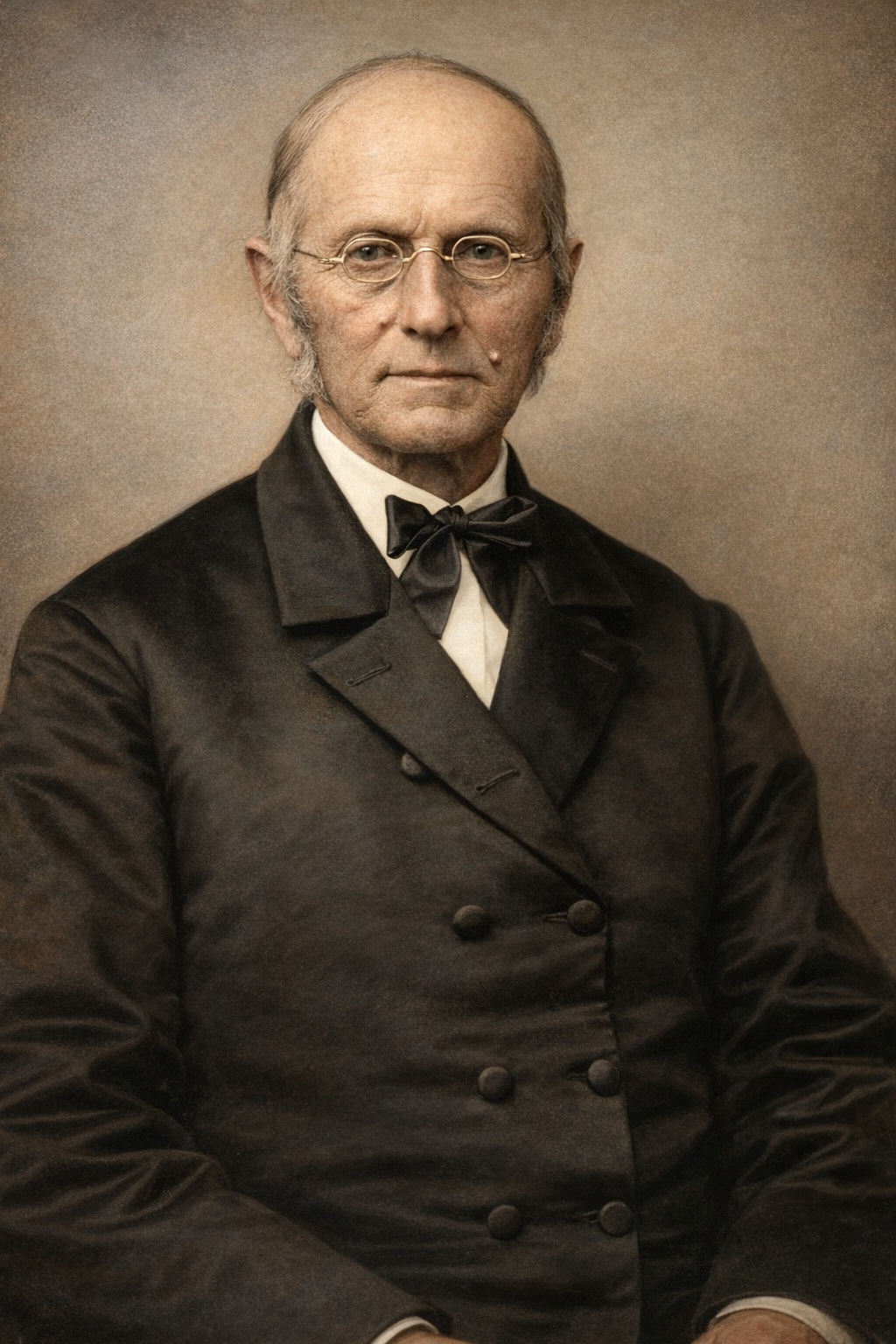
Captain Joseph Bates (1792–1872) — Co-founder of the original Seventh-day Adventist platform of truth (1841–1860) — not the “new organization” state church incorporated April 15, 1904
The Sea Captain Who Helped Lay the Foundation of Truth
Joseph Bates commanded ocean voyages before he ever commanded a congregation. A retired sea captain from Rochester, Massachusetts, he brought to the Advent movement the decisive authority of a man accustomed to navigating by the stars and obeying fixed laws — and he applied that same precision to the Bible.
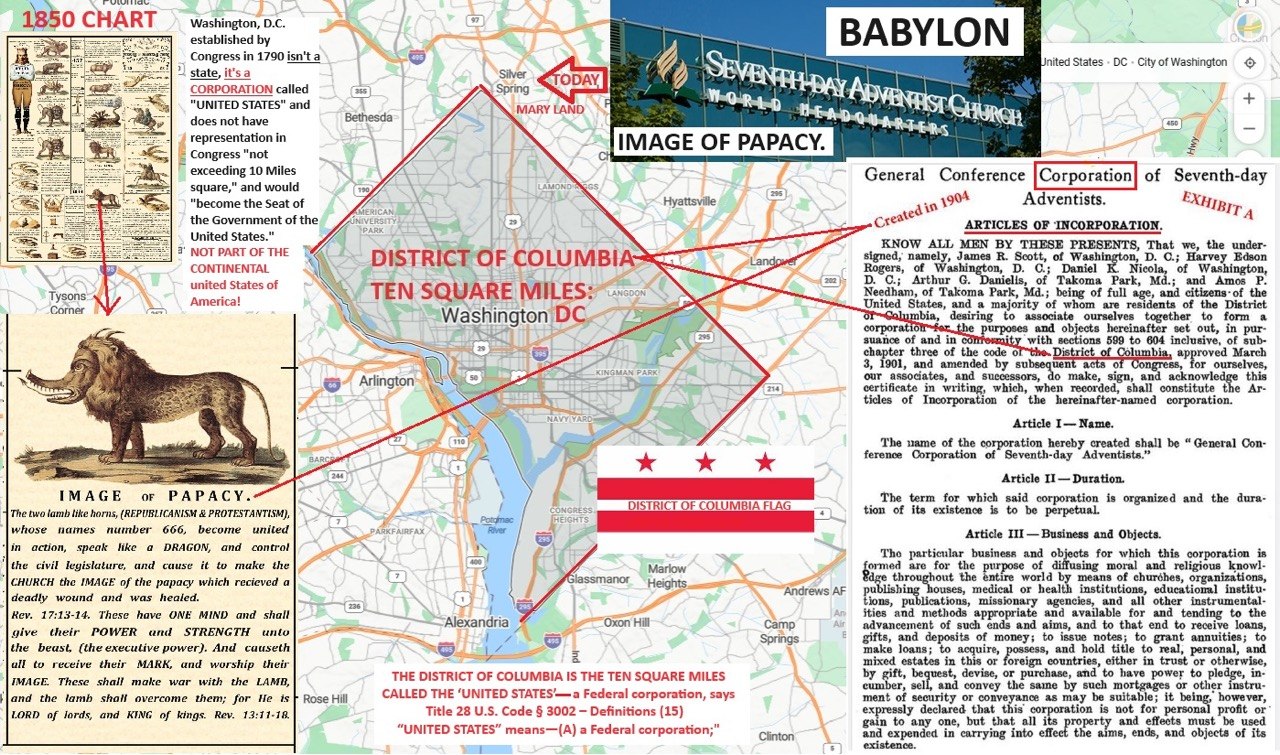
In 1846 he published his first Sabbath tract, The Seventh-Day Sabbath, A Perpetual Sign, spending his last money to print it. He sent a copy to James and Ellen White. The result? The Whites accepted the Seventh-day Sabbath — and the three of them became the founding trio who established the original, living platform of Seventh-day Adventist truth — the foundation laid between 1841 and 1860, which remains the true standard for all who cling to the light as it was given in the beginning. This is the foundation Bates helped build. It is not the “new organization” (1SM 204) incorporated as the General Conference Corporation of Seventh-day Adventists on April 15, 1904 — nor the entity now operating under the name General Conference of Seventh-day Adventists — the state church formed in New Rome, the District of Columbia, in union with the civil powers of the United States.
His 1849 treatise A Seal of the Living God went further — connecting the Sabbath to Revelation 7’s sealing of the 144,000 and identifying obedience to the Fourth Commandment as the distinguishing mark of God’s sealed remnant in the last days. It remains the foundational text of Adventist seal theology.
Bates was also a radical reformer: total abstainer from alcohol and tobacco, an abolitionist who refused to eat sugar produced by slaves, and a health reformer decades before the Adventist health message was formally articulated.
“We cannot now enter into any new organization, for this would mean apostasy from the truth.”
— Ellen G. White, 1SM 204 (Letter 242, October 1903) — Six months before the April 15, 1904 incorporation
The original Seventh-day Adventist platform of truth, established 1841–1860. Unregistered. Unincorporated. Belonging to all who keep the Commandments of God and the Faith of Jesus (Rev. 14:12). Still living today wherever the truth is held without compromise.
Incorporated as the General Conference Corporation of Seventh-day Adventists in the District of Columbia — New Rome — now operating as the General Conference of Seventh-day Adventists. A civil entity under Caesar’s law. Built 32 years after Bates died. Not his church.
“The third angel’s message was, and still is, a WARNING to the saints to ‘hold fast,’ and not go back, and ‘receive’ THE MARKS which the virgin band got rid of, during the second angel’s cry.”— James White, A Word to the “Little Flock”, April 21, 1847, p. 11
The April 15, 1904 state church — incorporated as the General Conference Corporation of Seventh-day Adventists, now operating as the General Conference of Seventh-day Adventists — followed the same path as the fallen Protestant churches in 1843–1844 during the Second Angel’s cry — adopting Roman hierarchical structures, creeds, and civil incorporation. Yet here they are — the state church going back to Rome’s false doctrines.
“Martin Luther, and other reformers, arose in the strength of God, and with the Word and Spirit, made mighty strides in the Reformation. The greatest fault we can find in the Reformation is, the Reformers stopped reforming. Had they gone on, and onward, till they had left the last vestige of Papacy behind, such as natural immortality, sprinkling, the trinity, and Sunday-keeping, the church would now be free from her unscriptural errors.”— James White, Advent Review and Sabbath Herald, vol. 7, Feb. 7, 1856, p. 148, ¶22
The pioneers did not borrow from Rome. They rejected Rome. When the movement incorporated in 1904 and began structuring itself after the very ecclesiastical hierarchies it had spent a generation exposing, it did exactly what White warned against — it stopped reforming.
“The true faith putteth the resurrection, which we be warned to look for every hour. The heathen philosophers, denying that, did put that the souls did ever live. And the Pope joineth the spiritual doctrine of Christ and the fleshly doctrine of the philosophers together; things so contrary that they cannot agree … And ye, in putting them in heaven, hell, and purgatory, destroy the arguments wherewith Christ and Paul prove the resurrection. And again, if the souls be in heaven, tell me why they be not in as good case as the angels? And then what cause is there of the resurrection?”— William Tyndale, An Answer unto Sir Thomas More’s Dialogue (1531)
Tyndale saw it clearly: natural immortality — the doctrine that the soul lives on at death — is Aristotle and heathen philosophy, absorbed by Rome, and passed on unchallenged into Protestant churches that stopped reforming. It is not in the Bible.
“Although it is true that there was a period in the life of the Seventh-day Adventist Church when the denomination took a distinctly anti-Roman Catholic viewpoint … that attitude on the church’s part was nothing more than a manifestation of widespread anti-popery among conservative Protestant denominations in the early part of this century and the latter part of the last, and which has now been consigned to the historical trash heap so far as the Seventh-day Adventist Church is concerned.”— Neal C. Wilson, past president, General Conference of Seventh-day Adventists — Reply Brief for Defendants, p. 4
The Three Angels’ Messages — the very platform Joseph Bates, James White, and Ellen White gave their lives to proclaim — declared a “historical trash heap” by the president of the 1904 state church, under oath, in a federal court.
“There is another universal and truly Catholic organization, the Seventh-day Adventist Church.”— Neal C. Wilson, General Conference President — Adventist Review, March 5, 1981, p. 3
The Loud Cry of the Revelation 18:1–5 angel joins the Third Angel’s Message (Rev. 14:9–12) with one final call to God’s people still inside the corporate structure. The April 15, 1904 incorporation joined church and state together and became Babylon the very moment it was created — as documented in the 1905 Seventh-day Adventist Yearbook (pp. 139–156). Can you join with those who deny God’s Word?
“Flee from the Laodicean churches like Lot from Sodom! Their teachings lead to destruction — DEATH! DEATH!! eternal DEATH!!! is on their track.”— Joseph Bates, 1850