Daniel K. Nicola —
The Last Name That Completed Babylon
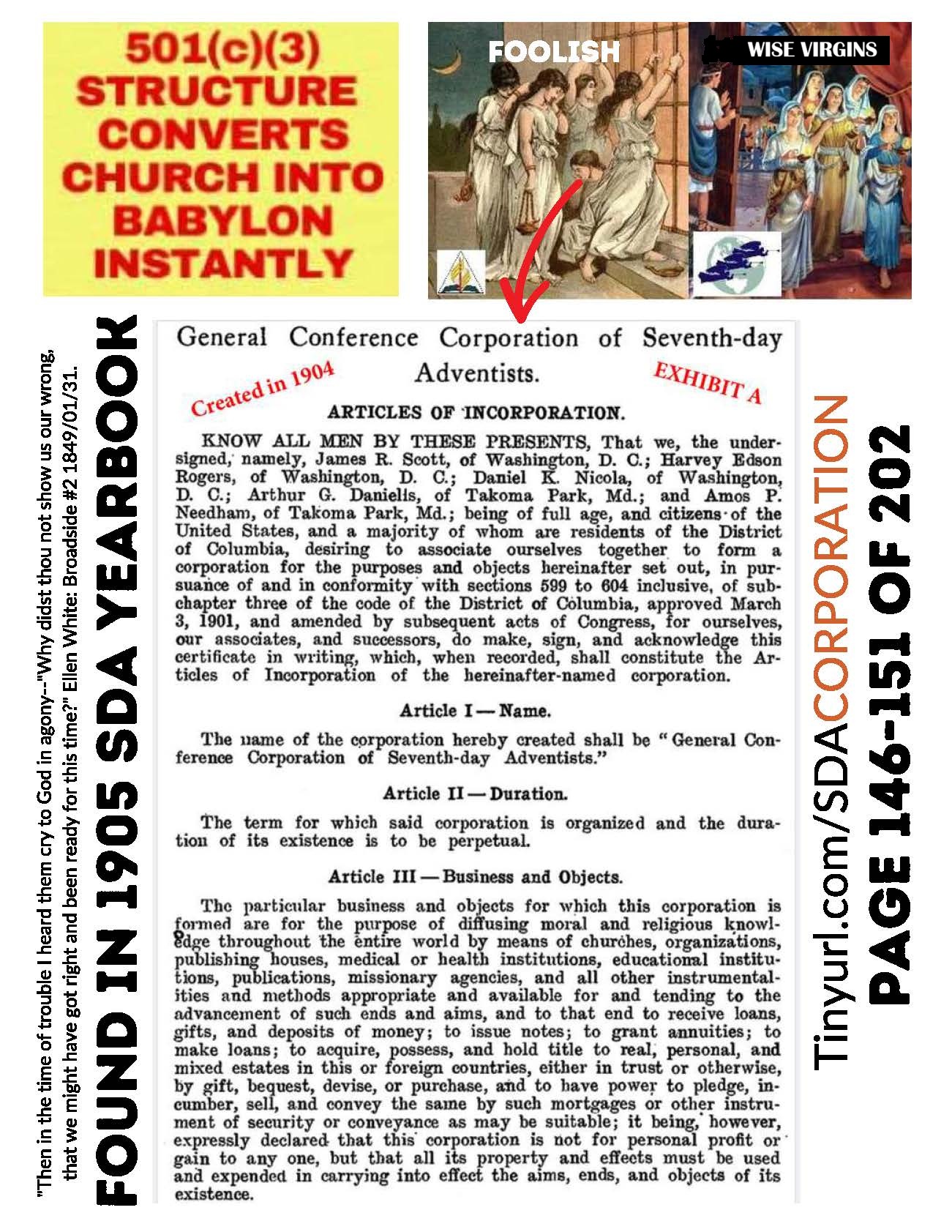
Daniel K. Nicola wrote the fifth and final signature on the Articles of Incorporation of the General Conference Corporation of Seventh-day Adventists on April 15, 1904. His pen stroke was the last act required to legally complete the formation of the corporation. When he lifted his pen, it was done. The free Advent movement — born in the prophetic study of 1841, constituted at the 1844 Disappointment, and named in 1860 — was from that moment onward impersonated by a state-registered civil entity in Caesar's own capital city.
He was last. He knew what the four before him had done. He wrote his name anyway.
What Daniel K. Nicola's Signature Accomplished
Civil corporate law requires a minimum number of signatories to validate the formation of a corporation. Each signature is not redundant — each one builds the legal weight of the document. The fifth signature was the closing act. Without it, the document was incomplete. With it, the incorporation was accomplished.
When Nicola's ink dried on April 15, 1904:
- → The "General Conference Corporation of Seventh-day Adventists" was legally constituted as a D.C.-jurisdiction civil corporation.
- → The name "Seventh-day Adventist" was effectively appropriated into a civil legal structure — making the pioneer name a registered corporate asset.
- → The prophetic structure Ellen White had warned against six months earlier — "a new organization" = "apostasy from the truth" — was formally established.
- → The Image of the Papacy — a church body using civil legal authority — was created in Washington, D.C., the city designed after Rome.
How We Got Here
The Last Man Had the Most Warning of All
By the time Nicola's pen touched the paper, four others had already signed. If the Spirit of Prophecy testimony was clear to the first signer, it was even more available to the fifth. The document was in front of him. The ink of four signatures was drying. He could have refused. He could have been the one who stood in the breach and said: "I will not sign this. I have read Letter 242."
He did not.
“We cannot now enter into any new organization, for this would mean apostasy from the truth. Their foundation would be built on the sand, and storm and tempest would sweep away the structure.”— Ellen G. White, 1SM 204 (Letter 242, October 1903)
“Those who have a knowledge of the testimonies, and yet pursue a course in direct opposition to the light God has given, show that they despise that light. If they continue in this course, they will drift into irretrievable darkness.”— Ellen G. White, Testimonies to Ministers, p. 109
“The first step of apostasy is to get up a creed, telling us what we shall believe. The second is to make that creed a test of fellowship. The third is to try members by that creed. The fourth to denounce as heretics those who do not believe that creed. And fifth, to commence persecution against such.”— John N. Loughborough, Review & Herald, October 8, 1861 — Nicola's signature completed the institutional instrument that would carry out each of these five steps.
The Charges Against Daniel K. Nicola
- ICompleting the act of corporate apostasy. Nicola's was the signature that legally completed the formation of the 1904 corporation. Without his fifth name, the document was incomplete. He bore personal responsibility for the crossing of the final legal threshold.
- IIDeliberate defiance of prophetic testimony. As the last signer, Nicola had more opportunity than any other signatory to reflect on what was being done and to refuse. Four signatures before his had already been written. He had time, example, and the Spirit of Prophecy's plain testimony. He chose the corporate document over the prophetic counsel.
- IIICompleting the Image of the Papacy structure. The 1904 corporation — fully constituted the moment Nicola signed — became the parent entity of a church-state structure the pioneers had spent their lives exposing. Nicola completed it.
- IVContributing to perpetual name theft. The corporation whose legal existence was sealed by Nicola's pen has, for over a century, claimed the name "Seventh-day Adventist" as a registered trademark — excluding, persecuting, and bringing legal action against non-corporate Adventists who use their own pioneers' prophetic name. This was made possible by Nicola's signature.
- VCompleting voluntary subjugation to Caesar. With the fifth signature, the formation of the D.C. corporation was complete — and with it, the voluntary placement of the Advent movement under the laws of the very nation-system the prophetic charts had identified as the seat of the second beast of Revelation 13.
- VIRefusing to stand in the breach. The greatest charge against Nicola is not only what he did — but what he refused to do. He had four examples before him, a plain prophetic warning, and the full knowledge of what was being accomplished. He became the final act of a tragedy he had the unique power to prevent. He wrote his name anyway.
“Congress shall make no law respecting an establishment of religion, or prohibiting the free exercise thereof…”— First Amendment, U.S. Constitution, December 15, 1791
The First Amendment protected Adventist believers from government entanglement in religion. Daniel K. Nicola's fifth signature — the final act in the April 15, 1904 incorporation — completed the voluntary surrender of that constitutional protection. With his name, the church's legal existence was placed under the laws of D.C., the IRS, and the civil courts. The freedom was absolute until the moment Nicola's pen lifted from the page. Official source: constitution.congress.gov →
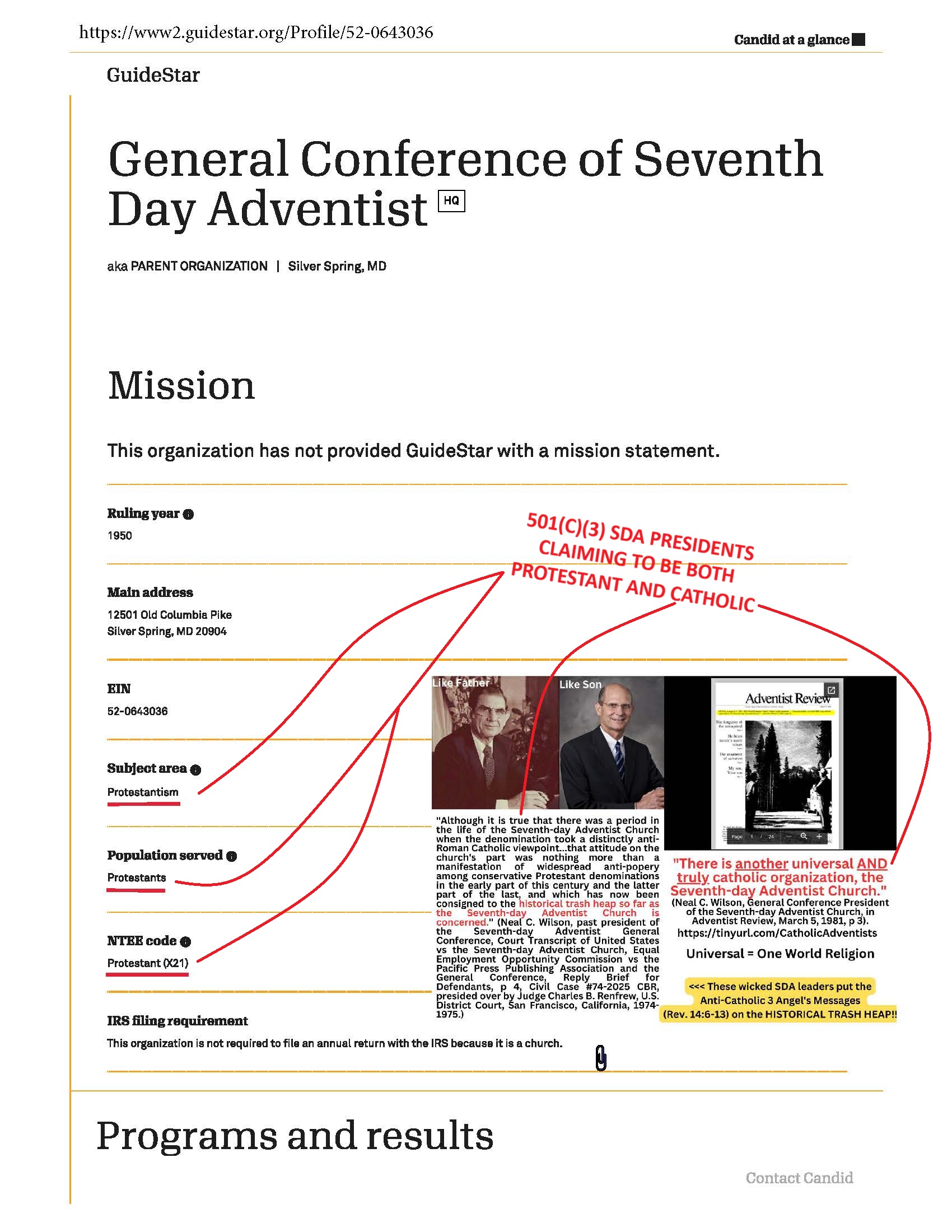
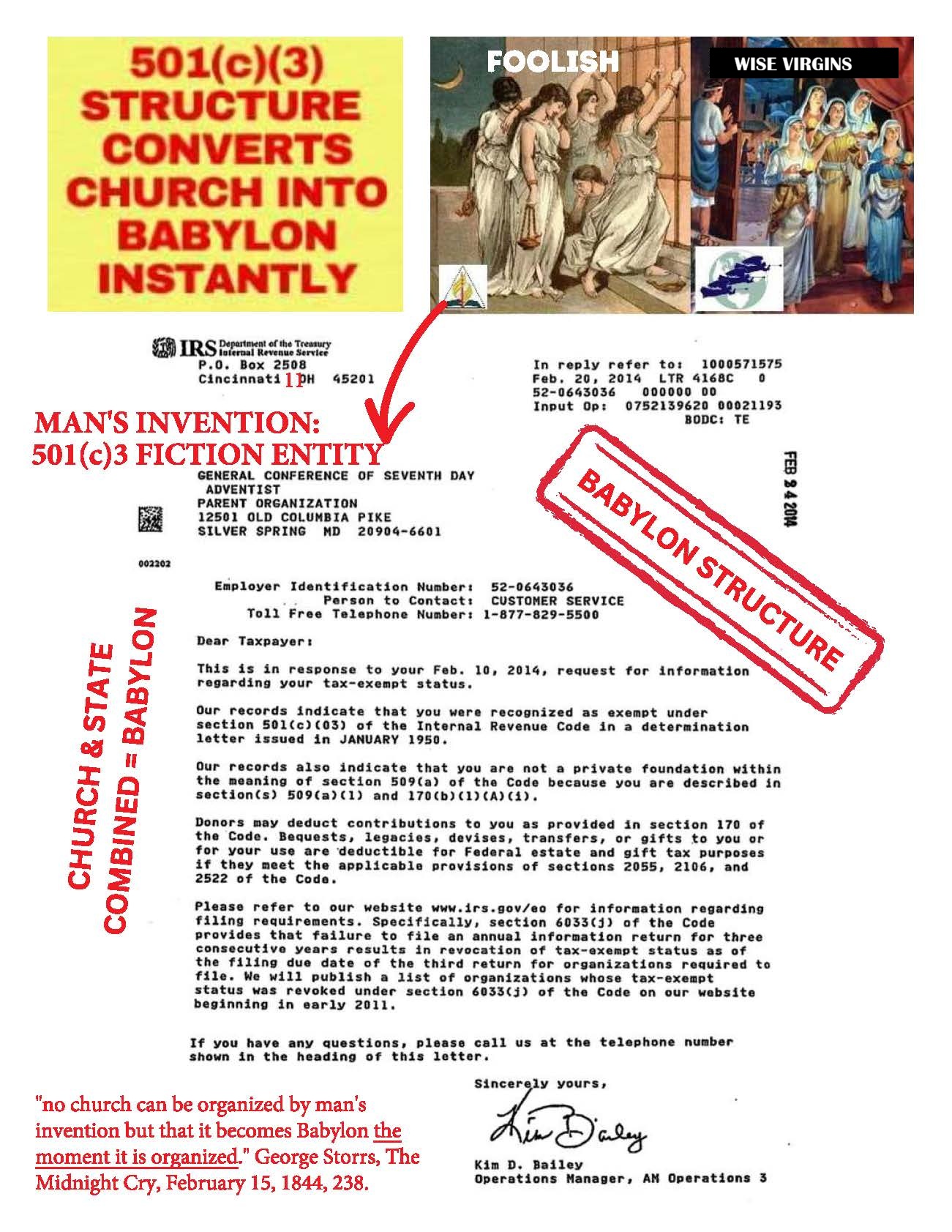
EIN #52-0643036 — The IRS Chain
The General Conference Corporation of Seventh-day Adventists, constituted by the five signatures including Nicola's, is the parent organization registered with the IRS under Employer Identification Number 52-0643036. The 1950 IRS ruling confirming this status is publicly available. Nicola's pen made it possible.